 Plenary Speaker
Mona Jarrahi
University of California Los Angeles
USA
Mona Jarrahi is a Professor and Northrop Grumman Endowed Chair in Electrical and Computer Engineering at the University of California Los Angeles, where she directs the Terahertz Electronics Laboratory. She received her B.S. in Electrical Engineering from Sharif University of Technology in 2000 and her M.S. and Ph.D. from Stanford University in 2003 and 2007. Following postdoctoral research at the University of California Berkeley and an Assistant Professorship at the University of Michigan Ann Arbor, she joined UCLA in 2013. Her research develops ultrafast electronic and optoelectronic devices and integrated systems for terahertz, infrared and millimeter-wave sensing, imaging, computing and communication, using novel materials, plasmonic nanostructures and quantum structures. Her work has resulted in more than 400 publications and 280 invited talks. Her awards include the Presidential Early Career Award for Scientists and Engineers, a Moore Inventor Fellowship, a Guggenheim Fellowship and the IET A F Harvey Engineering Research Prize. She is a Fellow of AAAS, IEEE, Optica, SPIE, APS and the Institute of Physics.
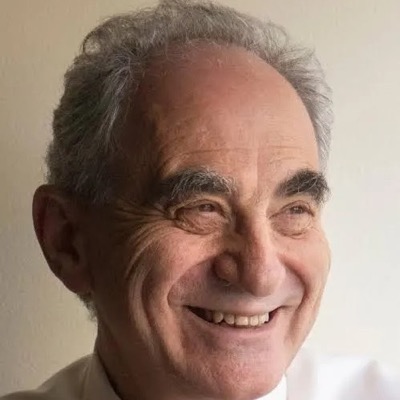 Plenary Speaker
Eli Yablonovitch
University of California, Berkeley
USA
Eli Yablonovitch is a Professor of Electrical Engineering and Computer Sciences at UC Berkeley, where he holds the James & Katherine Lau Chair in Engineering. He introduced the idea that strained semiconductor lasers could have superior performance due to reduced valence band (hole) effective mass. He is regarded as a Father of the Photonic BandGap concept, and he coined the term "Photonic Crystal". In his photovoltaic research, he introduced the 4(n squared) (“Yablonovitch Limit”) light-trapping factor that is in worldwide use, for almost all commercial solar panels. His startup company Ethertronics Inc. has shipped over 2 billion cellphone antennas. He is a Member of the National Academy of Engineering, the National Academy of Sciences and the American Academy of Arts & Sciences, and a Foreign Member of the Royal Society of London. He has been awarded the Buckley Prize of the American Physical Society, the Isaac Newton Medal of the UK Institute of Physics, the Rank Prize (UK), the Harvey Prize (Israel) and the IEEE Photonics Award. He is honorary Professor at Nanjing University.
 Plenary Speaker
Lei Zhou
Fudan University
China
Lei Zhou received his Ph.D. in 1997 at Fudan University, and worked as a postdoctoral researcher at Tohoku University (1997–2000) and Hong Kong University of Science and Technology (2000–2004). He joined the Physics Department of Fudan University in 2004, served as Chair of the Physics Department from 2020 to 2024, and became the Vice President of Fudan University in 2024. He is a Fellow of OPTICA, APS, and COS. He works in the fields of Metamaterials and Nanophotonics, has published 4 books, over 230 peer-reviewed papers in scientific journals such as Nat. Mater., Nat. Nano., Light: Sci. & Appl., PRL, PRX, etc., and got 18 invention patents granted. His total citations exceed 23000, and his H-index is 66 (Google Scholar). He has been continuously identified as a “Clarivate” Highly Cited Researcher since 2019. He is the winner of many prestigious prizes, including the second Prize of the National Natural Science Award of China and the first Prize of the Natural Science Award of Shanghai. He is the co-founding-Editor of Photonics Insights, and a managing editor of Nanophotonics (2019–2025).